Custom injection molding for motor projects
Motor insulation parts shaped around your project
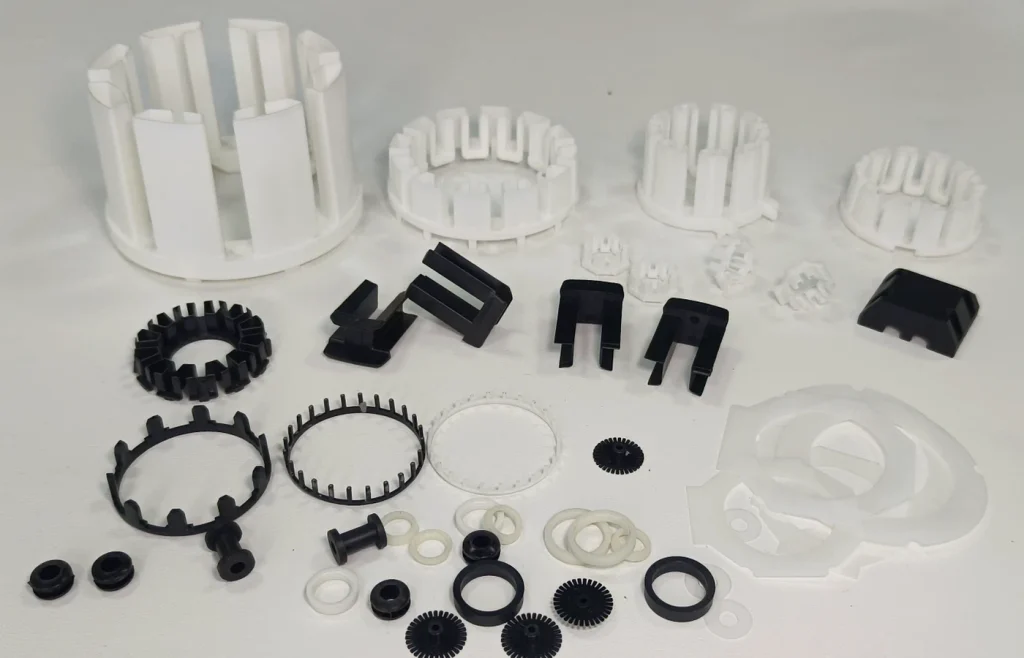
Separate molded insulation components or full and partial stator overmolding — reviewed from your drawing, physical sample or stator core information.
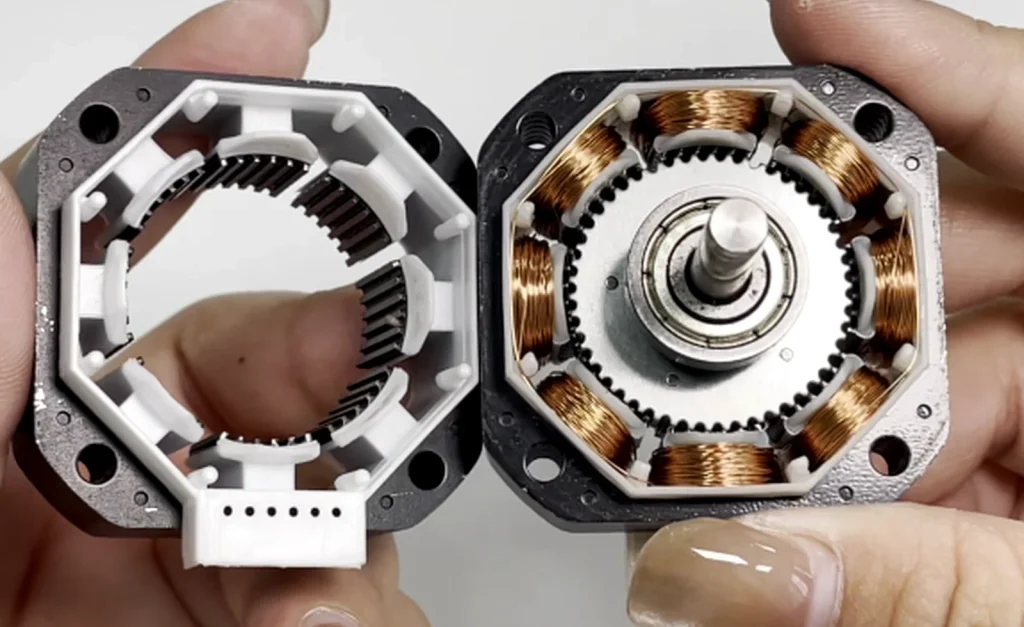
Start with how the plastic part is supplied
Customers do not need to identify every technical product name first. The clearest starting point is whether you need a separate molded part or plastic molded directly around a stator core.
Route 01 · Separate molded part
Independent Motor Insulation Components
For parts supplied separately and fitted into the customer’s motor or stator assembly.
- Stator end insulators — Identified mainly by their position at the ends of the laminated stator core.
- Motor / stator bobbins and frames — Identified mainly as separate molded carriers or winding structures.
- You send — 2D/3D drawing or physical sample.
- Typical output — Confirmed separate molded plastic parts.
Route 02 · Molded around the core
Stator Overmolding
For full or partial plastic overmolding around customer-supplied unwound stator cores or lamination assemblies.
- You send — Unwound stator core, drawing and coverage requirements.
- Typical output — Overmolded and inspected, still unwound stator part.
Winding is not included in the typical service scope.
Other custom molded motor components — Other motor- or stator-related custom molded insulation components can be reviewed from a 2D/3D drawing or physical sample. They remain a supporting range rather than a separate main project route.
From review to production
A sample is confirmed before mass production
Step 01 · Review
Review the project
Check the drawing, sample or stator core information and identify missing details.
Step 02 · Mold and sample
Develop mold and samples
Make and inspect samples after the project requirements are confirmed.
Step 03 · Approved production
Produce after approval
Start mass production after sample approval, with applicable checks during production and before shipment.
Review Quality & Manufacturing
Clear facts instead of broad promises
Materials are reviewed per project — Based on the known electrical, thermal, dimensional and commercial requirements.
Mold accuracy is not final part tolerance — Applicable in-house mold work can support machining accuracy up to ±0.02 mm; final molded-part tolerances are reviewed separately.
Inspection follows the requirement — Electrical testing is included only when required by the customer, drawing or project.
Send your motor insulation project
A drawing or physical sample can start an independent-part review. For overmolding, send the available stator core and coverage information. Missing details can be confirmed after the first review.
Phone and WhatsApp are optional. Add a number only if you prefer us to contact you that way.